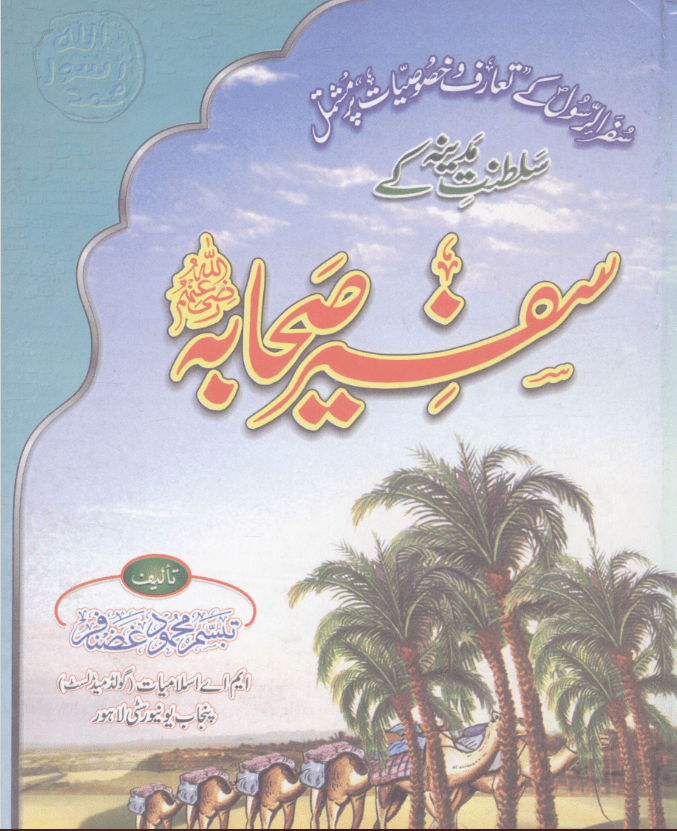
During the period of Jahiliyyah, when the Arabs were socially divided into different groups, the tribal system was prevalent and centuries-old rivalries and enmities were still going on in these tribes, even then those tribes believed in diplomacy to resolve disputes and asked their tribe for diplomacy. They would have chosen the person who was eloquent. The Roma people had set aside a group of religious leaders to settle such matters, which determined the rules of peace and harmony. In the early days in Turkey, ambassadors were usually chosen from among the officers of the royal palace.The matter of determining the terms of the Treaty of Hudaybiyah is a great example of this in which Hazrat Muhammad (pbuh) appointed Hazrat Ali as his representative to write the treaty. These representatives later came to be called ambassadors and thanks to them, relations between states have been recognized as an effective tool.The book under review, “The Ambassadors of the Kingdom of Madinah, Sahaba” is the research paper of Ms. Tabsum Mahmood Sahiba, the daughter of the well-known religious scholar and translator of many books, Maulana Mahmood Ahmad Ghazanfar, for her MA in Islamic Studies, which she wrote in 2001 at the Department of Islamic Studies, Punjab University, Dr. Hamad. Among the elite of Lakhvi ﷾, he got the privilege of getting the first position by presenting it under the title of “Introduction and Features of the Messengers”.Later, it has been published in the form of a book under the name of “Safir Sahaba of the Sultanate of Madinah”.
Saltanat E Madina KA Safar Sahaba (R.A)
 supremeseerah.com