
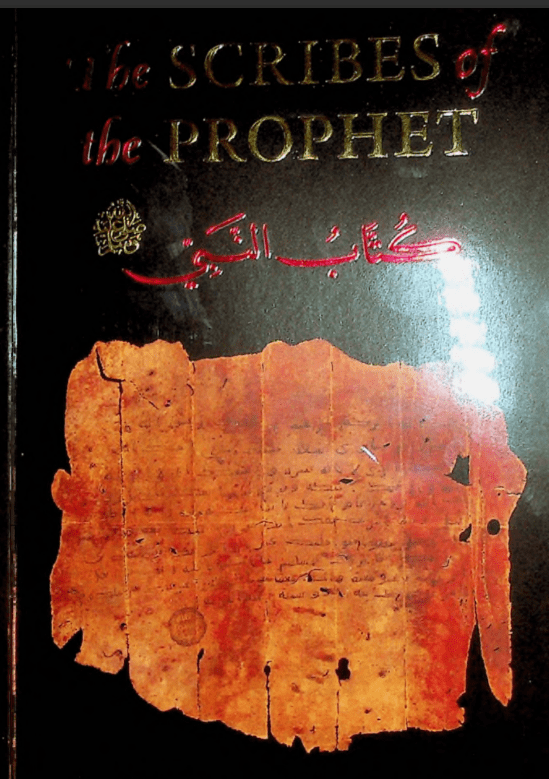
This book, The Scribes of the Prophet SAW, provides an extensive list of those Companions who had the honour of acting as scribbles to the Messenger of Allah SAW in his differing capacities as conduit of Revelation and head of the nascent Muslim State. Through biographies focusing on their secretarial activities, the reader is afforded a vital insight into this aspect of service performed by a privileged number of Companions. By synthesizing an extensive array of sources on Sirah, the author throws light on and reinvigorates the extant corpus documenting these secretarial activities, thus showcasing this branch of our Islamic heritage and the scholarship involved in interpreting it.
Since ancient times the Prophet’s correspondences have attracted special attention; even among the Companions we find ‘Amr ibn Hazm, Ibn ‘Abbas and others expressing a fascination with his letters.
Even in the era of ignorance preceding Islam the Arabs realized the importance of the pen; according to Ibn Sa’d it was one of the three pillars, along with swimming and archery, which signified
the maturity of a man and honored him with the title oFal-kamil* (the complete).1 But this pillar was not a fixture in the lives of most Arabs, nor did they make much of an effort to learn the art, probably because writing appeared useless to them in their daily routines. As a consequence, those who could read and write were extremely few. Some reports suggest that, at the time of Islam ’s first appearance, only 17 people from the entire tribe of Quraysh possessed this skill.
 supremeseerah.com