
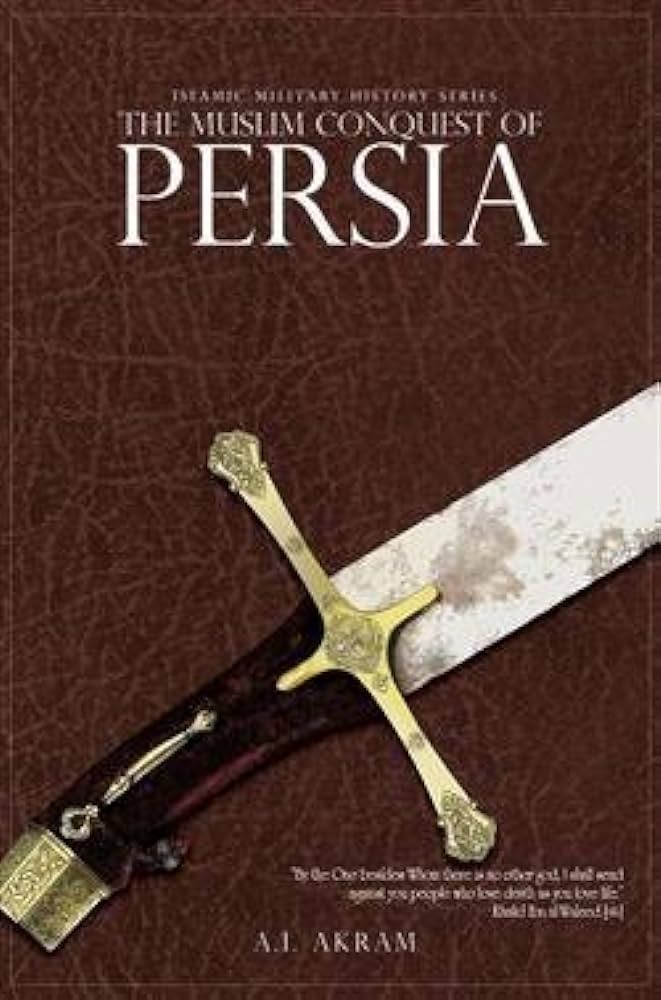
The Muslim conquest of Persia, also known as the Arab conquest of Iran, was carried out by the Rashidun Caliphate from 632 to 654 and led to the fall of the Sasanian Empire as well as the eventual decline of the Zoroastrian religion.
The rise of the Muslims in Arabia coincided with an unprecedented political, social, economic, and military weakness in Persia. Once a major world power, the Sasanian Empire had exhausted its human and material resources after decades of warfare against the Byzantine Empire. The Sasanian state’s internal political situation quickly deteriorated after the execution of King Khosrow II in 628. Subsequently, ten new claimants were enthroned within the next four years.Following the Sasanian civil war of 628–632, the empire was no longer centralized.
In another event in the heat of the battle, a westerly wind of great force blew away the sunshade or canopy of the Persian general Rustam’s throne. At Al-Qadisiyyah, the Muslims were able to break the Persian might, dealing them a blow from which they would never recover. The Battle of Al-Qadisiyyah is therefore one of the most decisive battles in the history of humanity.
We hope this book will shed further light for Muslim and other readers on this critical period in Islamic history. We thank our production team, including Muhsin Farani (Lahore office), Qari Muhammad Iqbal (Research Section, Head Office Riyadh), English editor Abdul Waghied Misbach and senior design artist Shahzad Ahmad for helping to produce this illuminating publication. We pray that Allah, the Most High, blesses our efforts.

